How to Handle Busy Morning Rushes in Your Cafe
The morning rush exposes every weak point in a cafe. A menu that looked sensible at 2 p.m. Can feel clumsy at 8:10 a.m. A team that works smoothly during a quiet midmorning can suddenly trip over one another when twenty orders land in six minutes. Customers who are perfectly pleasant on a weekend afternoon can become impatient before work, before school drop-off, or before a train departure. That pressure is not a sign that anything is wrong. It is simply the real test of whether the business has been designed for speed as well as quality.
Most operators learn this the hard way. A busy breakfast period does not usually fail because one person made a single mistake. It fails because a dozen small frictions pile up at the same time. Milk runs out at the bar. The pastry case has no clear labels. One staff member is taking a custom order while another is hunting for lids. The espresso machine is waiting on a grinder adjustment. A guest asks where to stand for pickup, and three more customers drift into the wrong line behind them. None of those issues is dramatic by itself. Together, they slow the room down.
Handling the rush well starts with accepting one uncomfortable truth. Morning service is not just normal service happening faster. It is a different mode of operation. The cafe that thrives during peak time usually treats it that way, with its own prep standards, staffing logic, physical layout, and communication style.
Speed begins before the doors open
If the first ten minutes of service feel frantic, the real problem often started an hour earlier. Morning rushes are won in setup. The best cafes do not merely open on time. They begin the day in a state where the first wave can be absorbed without anyone scrambling.
That means par levels are based on peak demand, not average demand. If your shop typically sells sixty to eighty milk drinks between 7 a.m. And 9 a.m., then the milk station, cup stock, lids, syrups, pastries, and grab-and-go items should be loaded for that pace. Many operators understock the front because they want to keep the counter neat. Visually tidy is nice. Operationally ready is better.
A useful way to think about prep is to identify every movement that tends to happen during a rush and ask whether it can be eliminated before service starts. If a barista needs to leave the machine to restock cups, that is a preventable delay. If a cashier has to ask the kitchen whether the spinach feta croissant is sold out, that is a preventable delay. If someone needs to open a new oat milk carton while four tickets are waiting, that is a preventable delay.
The strongest opening routines are painfully specific. “Set up the pastry case” is vague and easy to half-finish. “Label every tray, count backstock, and confirm what can be replenished in under thirty seconds” is far more useful. Precision feels fussy until a line reaches the door. Then it becomes freedom.
Build the rush around your highest volume items
Every cafe has a handful of products that dominate the morning. Drip coffee, cappuccinos, lattes, breakfast sandwiches, and a few pastry staples usually make up the bulk of orders. Yet many shops design their workflow as if every menu item deserves equal attention. That is generous, but it is not practical during peak periods.
If seventy percent of your morning tickets contain milk-based espresso drinks, the bar should be arranged around producing those drinks with minimal movement. Milks should be where the barista naturally reaches. Cup sizes should be instantly accessible. Lids, sleeves, sugars, and stirrers should not create traffic jams. If batch coffee moves quickly, self-serve can save precious seconds, assuming it is positioned so customers do not block the register or pickup area.
This is also where menu discipline matters. A bloated breakfast menu can create hidden service problems. A beautifully conceived item that requires separate heating, a custom garnish, and a lot of explanation may still be worth offering, but not necessarily before 10 a.m. Some cafes quietly shift emphasis in the morning toward items that are quick to assemble, easy to communicate, and consistently profitable. That is not lowering standards. It is recognizing the economics of rush-hour labor.
I have seen cafes cut average ticket time simply by tightening the “decision window” for guests. When the pastry case is cluttered, handwritten signs are inconsistent, and custom options require a conversation, ordering drags. When the top sellers are obvious, clearly priced, and easy to say out loud, the line moves better. Customers often appreciate that clarity more than endless choice.
Staffing for volume, not optimism
A common scheduling mistake is building the morning shift around the assumption that everyone will perform at their theoretical best. In reality, one late arrival, one new team member, one broken grinder, or one especially chatty regular can throw off the whole period. Rush staffing needs a buffer.
That does not always mean adding more people. It means assigning roles that match the actual bottlenecks. During a true morning rush, the costliest thing is role confusion. If two people keep stepping into the same task while another station is unsupported, your labor dollars are not solving the problem.
A strong peak-time floor usually has clear ownership. One person leads the register and manages order flow. One or two people stay planted on drinks, depending on volume. Someone handles warming, pastry handoff, and light restocking. In smaller shops, those roles overlap, but the priority order still needs to be understood by everyone.
Cross-training matters here, though it is often misunderstood. Cross-training does not mean everyone does everything at all times. That can create chaos. It means the team can cover breaks in the flow without losing momentum. A cashier should know enough bar support to restock lids or call out obvious drink labels. A barista should know how to answer a quick product question without sending a customer back to the register. A food runner should know when not to interrupt the espresso station unless the issue is urgent.
The most reliable teams also understand pace, not just tasks. Some employees are technically skilled but work in a way that is too delicate for a breakfast surge. Morning service rewards calm urgency. Drinks still need to be right, but hands need to move with intention. Managers sometimes focus only on training recipes and POS functions, when what the staff really needs is practice under realistic load.
One of the most effective exercises is to simulate a rush before it happens naturally. Ring in a stack of common tickets, have the team work them in sequence, and time how long it takes. You will quickly see where the friction lives. Often it is not where people assume. The espresso is fast enough, but food pickup is slow. The register is efficient, but the handoff zone is muddled. Simulation turns vague frustration into something fixable.
The line should be easy to read from the front door
Customers can forgive a wait more readily than confusion. If they walk into a busy cafe and immediately understand where to stand, where to order, where to collect drinks, and where to grab condiments, you have already lowered tension. If they have to ask, hover, or guess, the rush feels worse than it is.
Physical layout does a lot of hidden work. The ordering point should be obvious. The pickup area should be separate enough that waiting guests do not crowd people trying to order. If mobile orders are part of your business, they need their own visible pickup cue. Otherwise, you get the worst version of both systems, a register line tangled with customers who already paid on their phones.
Signage helps, but only if it is concise. During a rush, no one reads a paragraph. “Order here,” “pickup,” and “mobile orders” are enough if placed well. Menu boards also need restraint. A menu that requires scanning six columns slows down the line. Leading with the top sellers and popular modifiers makes ordering feel easier.
There is a subtle psychological benefit to a well-designed queue. When people can see progress, they stay calmer. If the line inches forward in a visible way and drinks are being called steadily, the wait feels productive. If nothing appears to move because the handoff zone is blocked or names are not audible, frustration climbs quickly even if the actual delay is modest.
Communication has to get shorter, not colder
Busy service can make staff sound abrupt. That is understandable, but it is not inevitable. The trick is to make communication shorter without making it unfriendly. Guests during the morning rush are usually looking for confidence and clarity more than conversation.
At the register, concise prompts work well. “For here or to go?” “Any food with that?” “Whole, oat, or almond?” Those small structures speed decisions without feeling robotic. What slows the line is open-ended phrasing that invites long, meandering answers when the cafe is already under pressure.
Back-of-house communication matters just as much. Teams that call clear, relevant information save one another time. “Last blueberry muffin in the case.” “Oat milk backup is under counter.” “Mobile order for Sara is missing the sandwich.” Those statements are actionable. Vague stress signals are not. “We’re slammed” may be true, but it does not help anyone move faster.
Tone comes from leadership. If the shift lead sounds panicked, the room tightens up. If the lead speaks calmly and gives short, direct guidance, the team usually follows. That calm is not cosmetic. It preserves decision-making. A rattled staff starts making avoidable mistakes, remaking drinks, forgetting modifiers, and skipping simple checks that would have saved time later.
Simplify the handoff, or the bar will choke
A lot of cafes assume the bottleneck is drink production when the real problem is handoff. Drinks are made, then they sit. Food is ready, but no one knows whose it is. A guest grabs the wrong cup. Another person interrupts the barista to ask whether their order is coming. Suddenly the bar becomes a customer service desk, a traffic controller, and a production line all at once.
The handoff area should answer basic questions without requiring staff intervention. Names need to be readable. If your cup-marking system is inconsistent, fix that first. If certain drinks look similar, call them distinctly and place them in an orderly pattern. If food and beverages are often completed at different times, train the team to explain that at the register so customers know what to expect.
A small but powerful change is assigning one person, during the busiest window, to protect the flow between production and pickup. In a high-volume cafe, that person can call names, group items, check missing components, and keep guests from clustering around the espresso machine. It is not glamorous work, but it often pays for itself in throughput.
Data helps, but direct observation matters more
Many cafe owners look at total morning sales and think they understand the rush. Sales tell only part of the story. What matters operationally is how demand arrives. Ten transactions every fifteen minutes is manageable. Thirty transactions in seven minutes is a very different challenge, even if the hourly total looks similar.
POS data can show peaks by quarter-hour, top-selling items, modifier patterns, and average ticket values. That is valuable. But the floor often reveals what the numbers miss. Where do people hesitate? Which station gets crowded first? How often does a staff member leave their zone? What gets asked repeatedly? Those observations are where the practical improvements live.
For one week, watch the morning with a notebook instead of relying on memory. Write down exact times when the line starts forming, when tickets begin stacking, what runs out, and what customers keep asking. Patterns emerge fast. Maybe the pastry case needs a second restock at 8:15. Maybe online orders spike exactly when local offices start work. Maybe the bottleneck appears every time one employee takes a break because their replacement is weaker on food assembly.
Once you see the pattern, small adjustments can produce outsized results.
Problems worth fixing first
If your mornings feel chaotic, resist the urge to redesign everything at once. Start with the issues that affect speed every day.
- Reduce steps at the bar. Move milk, cups, lids, and syrups into the barista’s natural reach.
- Clarify the customer path. Make ordering and pickup visually distinct.
- Tighten the opening setup. Stock for the peak, not for appearance.
- Limit morning complexity. Feature items that can be produced quickly and consistently.
- Assign roles clearly for the busiest hour, even if the rest of the day stays flexible.
These are not flashy improvements, but they tend to deliver fast gains. A cafe rarely needs a dramatic overhaul to handle rushes better. More often, it needs better sequencing and fewer unnecessary decisions.
When customization starts to hurt service
Most modern cafes rely on customization. Alternate milks, extra shots, half sweet syrups, no foam, extra hot, warmed pastries, gluten-conscious swaps, and breakfast preferences are normal. The issue is not whether to allow customization. The issue is knowing when the menu and workflow can absorb it.
If every third drink requires a long verbal exchange, your line speed will suffer. A good response is to make common modifications easier to order. Put standard milk options where customers can see them. Train cashiers to prompt efficiently. Program the POS so modifiers are easy to enter and easy for the bar to read.
There are also cases where boundaries help. Some shops quietly decide that a handful of labor-heavy requests are not available during the busiest morning window. Others keep the item but prepare part of it in advance. If a breakfast sandwich can be batch-prepped to the point of quick finishing, it stands a much better chance of surviving peak service.
Customers are usually reasonable when the policy is clear and the core offering is strong. Cafe They become frustrated when a cafe promises total flexibility but delivers long waits and inconsistent results.
The team needs recovery points
A packed morning is physically and mentally demanding. If the rush runs for two to three hours without any reset, standards slip. Spills go uncleaned. Countertops get sticky. Communication frays. People stop noticing small errors. Good managers build mini recovery points into the shift.
That might mean a ninety-second restock and wipe-down once the first wave breaks. It might mean swapping one person off the register for five minutes to reset focus. It might mean using the lull between two commuter surges to refill the pastry case and clear the handoff zone before the next push starts.
These moments matter because they stop the service from degrading over time. A cafe does not need to feel perfect at 7:30 a.m. And exhausted by 9:15. The goal is steady execution across the whole peak.
One experienced barista I worked with had a simple rule. If you touch the last of something, call it immediately. Not later, not when you get a second. Immediately. That habit alone prevented countless mid-rush failures. Small recovery habits like that are what keep a cafe from tipping into disorder.
How to respond when the rush goes sideways
Even well-run cafes have rough mornings. A grinder jams. A staff member calls in sick. A local event triples foot traffic. The measure of the operation is not whether problems happen, but how quickly the team can stabilize.
When the rush starts slipping, the first move is to simplify. Push attention toward the highest-volume items. Pause any nonessential side work. Get a lead person watching the entire flow rather than disappearing into one station. If needed, adjust customer expectations clearly and early. A calm “Food is running about ten minutes behind drinks this morning” is far better than making people guess.
Here is a practical triage sequence that works in many cafes:
- Identify the real bottleneck, register, espresso bar, food station, or handoff.
- Reassign one person to support that point immediately, even if another area becomes less polished.
- Strip out nonessential tasks until the queue stabilizes.
- Communicate wait times honestly to customers and to the team.
- Debrief after the rush while details are still fresh.
That last step is often skipped because everyone is tired. It should not be. The rough morning you unpack properly can become the best training tool you have.
Regulars, newcomers, and the rhythm of hospitality
There is a fear in some operations that speed and warmth cannot coexist. In practice, the best cafes manage both by understanding where hospitality actually lives during a rush. It is not in long conversations. It is in recognition, confidence, accuracy, and rhythm.
A regular who gets a quick “morning, the usual?” feels seen. A newcomer who can understand the menu and find pickup without asking feels cared for. A commuter who gets a correct drink in four minutes experiences that as hospitality, even if nobody had time for small talk.
This is especially important for neighborhood cafes that serve both loyal regulars and periodic drop-ins. Regulars can unintentionally slow the line if staff let every exchange expand. Most appreciate boundaries when the room is clearly busy. A warm tone and a promise to catch up later usually does the job. Protecting flow is part of serving the whole room well.
The rush should shape your systems, not your mood
Morning volume is not an interruption to cafe life. For many businesses, it is the engine of the day. The operators who handle it best stop treating it like a daily surprise. They build for it, train for it, and refine around it.
That means respecting setup, designing around bestsellers, scheduling for actual pressure, and keeping the customer journey obvious from the front door to pickup. It means trimming away tiny frictions that compound under load. It means understanding that a fast cafe is rarely fast by accident. It is fast because dozens of details have been considered before the first customer walks in.
When a morning rush goes well, the room has a particular feel. The line moves with purpose. Staff speak less, but communicate better. Drinks leave the bar steadily. Food appears when expected. Customers wait, but they do not wonder. That kind of service is not flashy, and it is not effortless. It is built through attention, repetition, and disciplined choices. In a busy cafe, those choices are what turn the rush from a daily strain into a reliable strength.
Bennies Cafe
17230 Jackson Creek Pkwy Ste 100, Monument, CO 80132
+1 719-445-0660
FAQ About Cafe
What is considered a café?
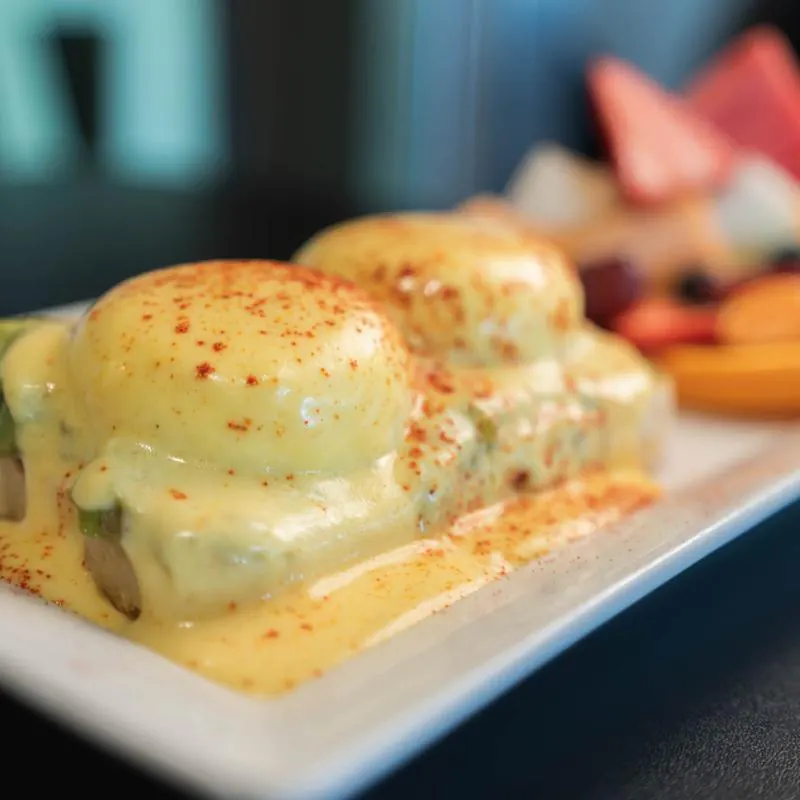
A café is generally an informal place to enjoy refreshments and a meal. Bennies Cafe in Monument serves breakfast and lunch in a counter-service setting, with options including eggs Benedict, sandwiches and crepes. Guests can eat in or arrange pickup.
What is the difference between a coffee shop and a café?
The terms often overlap. A coffee shop usually emphasizes coffee and other drinks, while a café may offer a broader food menu. Check the individual establishment's menu rather than relying on its name. Bennies Cafe offers coffee drinks alongside breakfast and lunch dishes.
What is the difference between café and coffee?
In everyday English, a café is a place where people buy food and drinks, while coffee is the beverage. The word café comes from the French word for coffee. Bennies Cafe serves options such as brewed coffee, espresso and lattes as part of its drinks menu.